A potager garden is a kitchen garden designed to be looked at as well as harvested from. A typical vegetable garden is planned around the harvest alone, laid out in rows and often tucked away, out of sight and out of mind.
A potager arranges vegetables, herbs, fruit and flowers in geometric configurations framed by paths and garden bed edges. The unique layout and structure of the materials and plantings ensures the potager garden looks both beautiful and ornamental, in every season.
Most advice about potager gardens would start with a plant list, but that's the opposite approach to take. What makes a potager garden stand out from your typical function-only vegetable garden is it’s uniquely structured design: the frame, the paths, the beds and a center.
This means we only talk plants once the design and structure have been nailed down. (BTW: this is true of ANY garden design, not just potager gardens.)
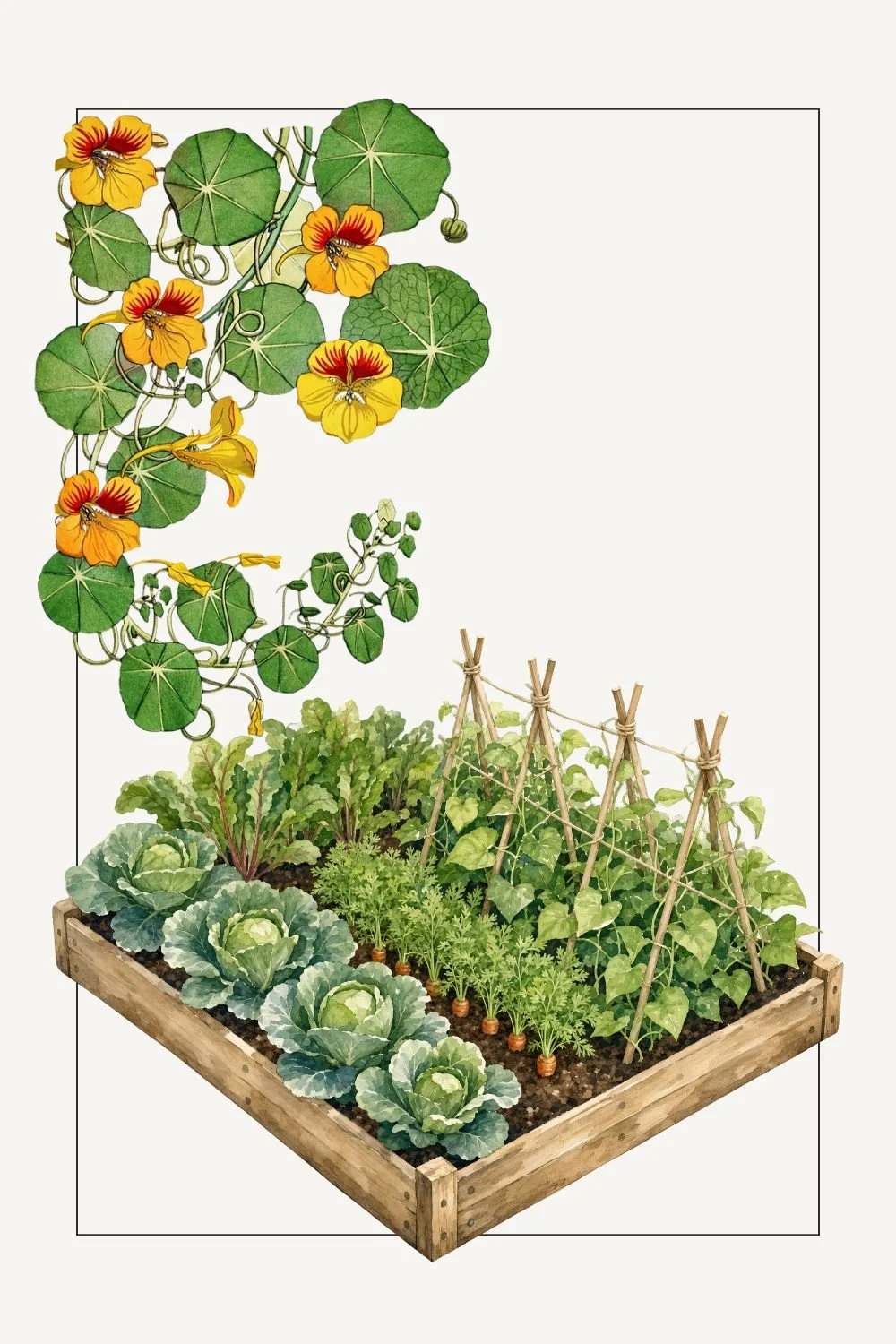
At a glance
A potager is the French ornamental kitchen garden designed to include edibles and flowers in a structured, geometric layout.
Design the frame, paths and beds first. They carry the garden visually in winter, when many crops are dormant.
Keep beds no wider than 4 feet so you can reach the middle without stepping on the soil.
Develop your plant list, and plant multiple specimens of each type in blocks rather than scattering them about. This makes care easier for you, and it makes it easier for the pollinators to identify beneficial plants.
The same layout works in any climate. Only the plant list changes.
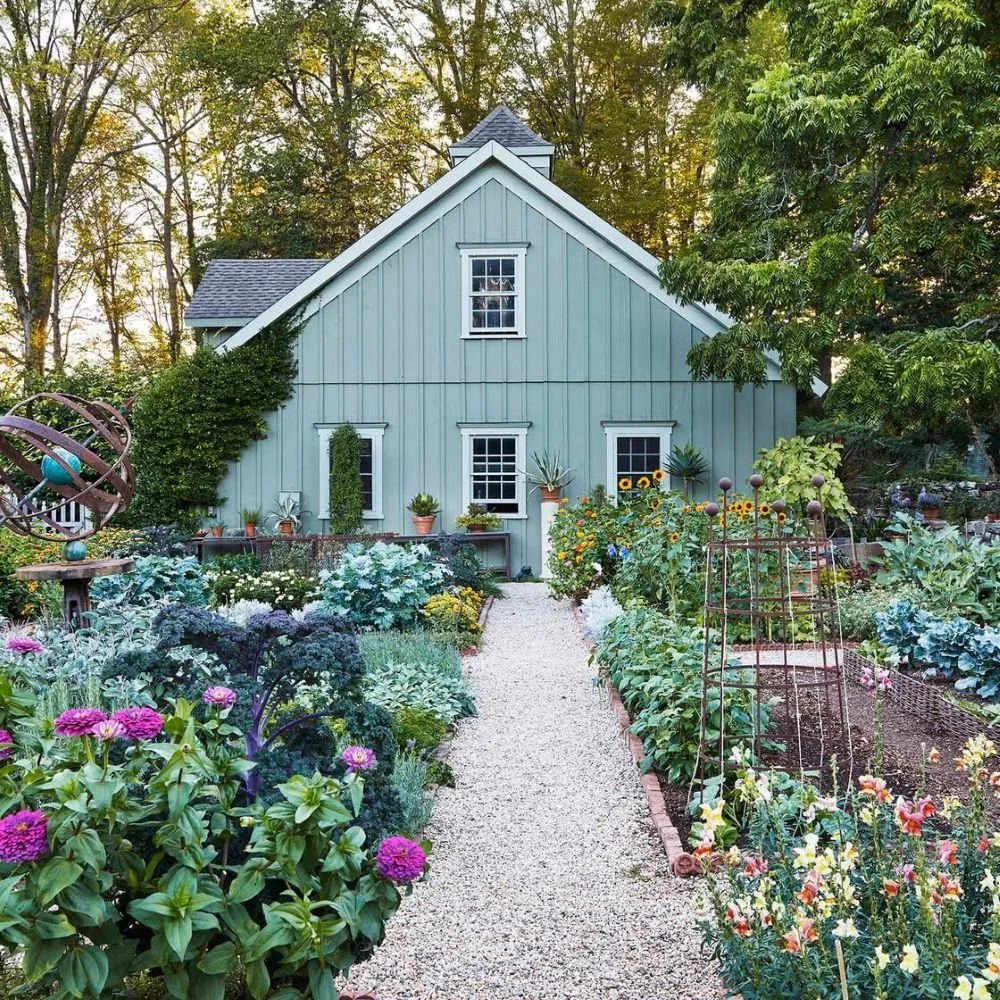
Potager garden with a colorful mix of edible and ornamental plants. Image: Veranda
What is a potager garden?
"Potager" is French for kitchen garden. The word comes from potage, the French word for a thick, traditional soup. So a potager was the garden that grew ingredients meant to be picked fresh and dropped straight into the daily soup pot.
Wealthy French country houses kept them close to the kitchen, and over time, beauty became an important factor in addition to the produce they supplied.
Vegetables were planted in patterns. Beds were edged with clipped boxwoods or other evergreen shrubs. Fruit trees were trained flat against walls and pruned into ornamental patterns in a technique called ‘espalier’, and flowers were planted amongst the fruits and veggies.
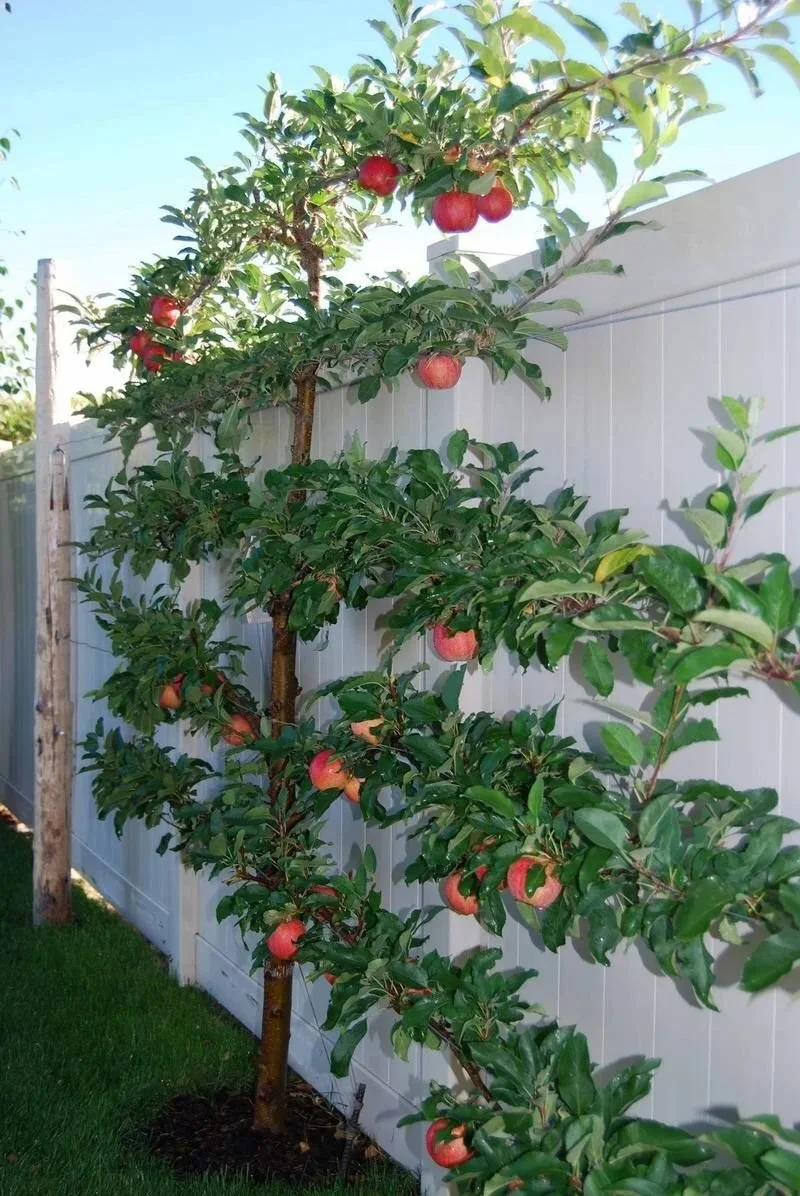
Espalier is a technique of training trees flat against a wall or fence line and pruning them into ornamental patterns. Image: Online Orchards
The best-known example is the potager at the Château de Villandry in France’s Loire Valley. Its kitchen garden is laid out in nine large squares, each filled with a different geometric pattern of box-edged beds, and the vegetables are replanted as needed during the year. The garden you see today was re-created in the early twentieth century from Renaissance garden plans.
I'll be writing about Villandry and what it can teach a home garden in a future post, so be sure to check back.
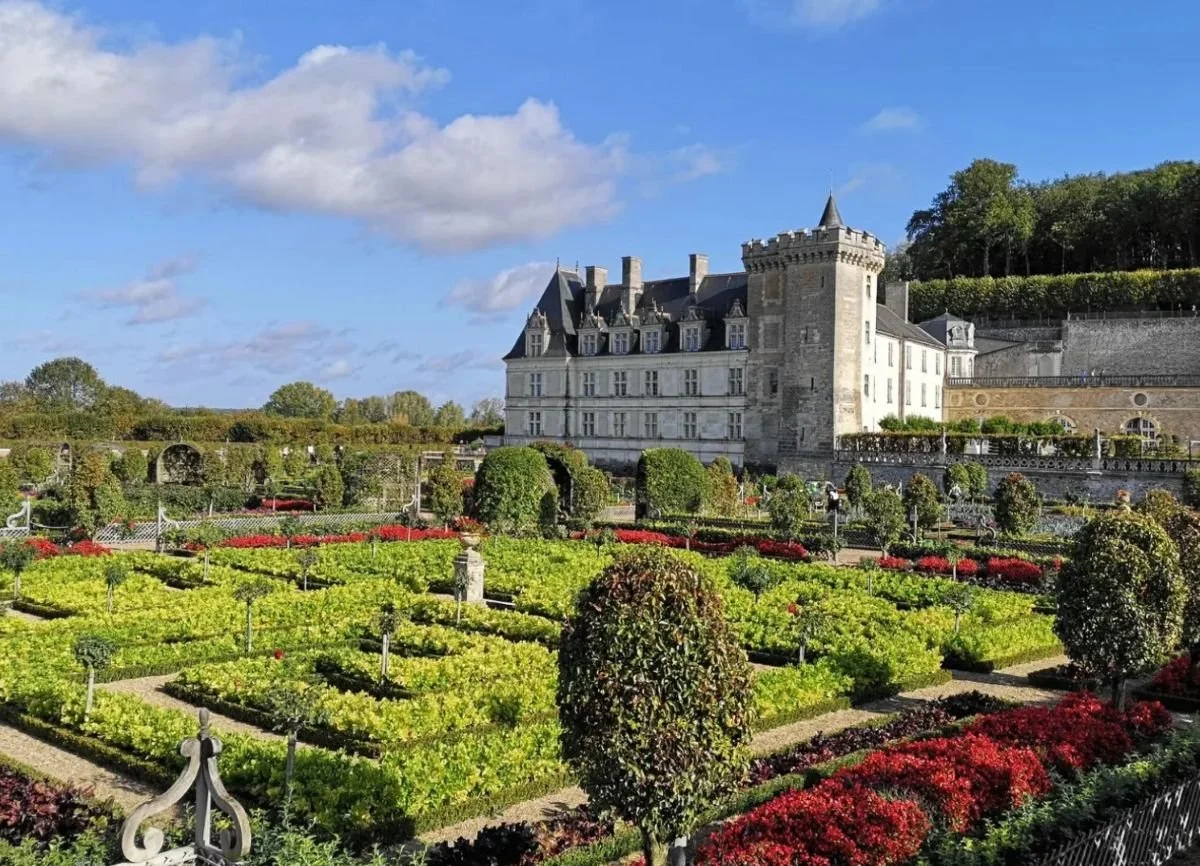
Chateau de Villandry is renowned for its famous potager gardens Image: ©Villandry
How is a potager different from a vegetable garden?
The majority of vegetable gardens are strictly utilitarian, organized around the harvest. They’re typically located in a sunny spot that's tucked out of the way, and little attention is given to making them aesthetically pleasing. More often than not, minimal consideration is given to making them easily accessible to work in and harvest from.
In contrast, a potager is organized around how the garden looks and how you move through it in addition to the . It has a clear shape, paths that are comfortable to walk on, edges that hold their line year-round, and often even focal points. Well-defined paths and raised beds make accessing and working within the garden much easier.
It produces an abundance of food, but the harvest isn't the sole reason it exists.
What makes potager garden design work year-round?
Vegetables are generally short-lived. Lettuce lasts a few weeks, tomatoes a season. If the garden's beauty depends on the crops, it looks wonderful in June but bare and bleak in January.
A well-designed potager draws its beauty from it’s permanent components such as path and bed definition and garden focal points.
For example, path materials like crushed rock or mulch, and path/bed edges defined metal or brick edging, living edges Like boxwoods or other low evergreens, or wooden raised beds. Additionally, other permanent elements like arches, trellis, or specimen fruit trees in large pots or trained espalier create beautiful wintertime focal points.
No matter if the beds are freshly planted or half-empty, the structure provided by these elements carries the potager through all four seasons.
The second design element that makes a potager garden work is repetition.
A bed filled with a single plant of many different kinds looks busy, even when each plant is lovely on its own. Repeating a smaller number of plants in blocks or lines gives the eye a pattern to follow, and the whole garden looks calmer and more interesting for it.
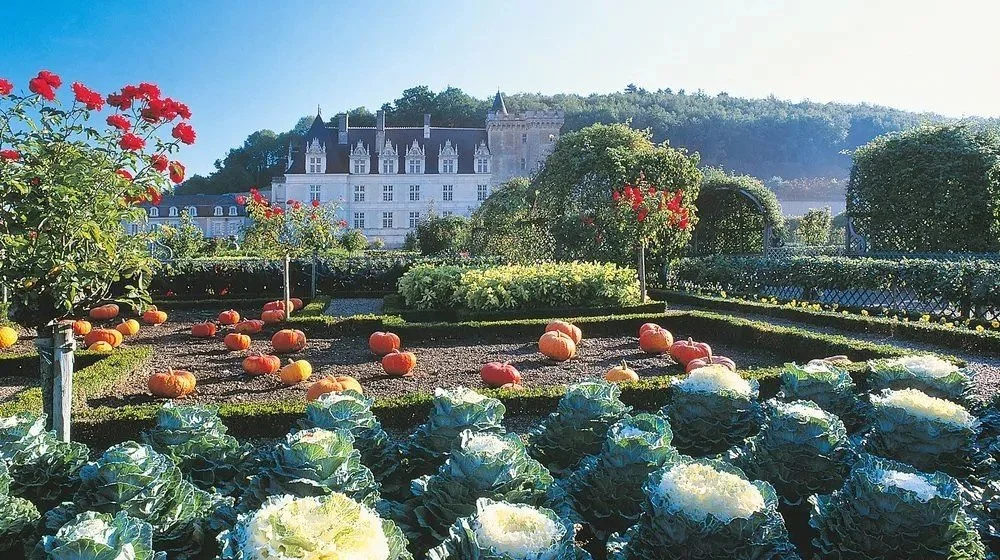
Chateau de Villandry potager still has much visual interest during fall-winter, reinforced by repetition of the cabbages, pumpkins and other cool weather crops. Image: ©Villandry
How do you design a potager garden, step by step?
Read below for the order I work in when designing a potager garden. Each step sets up the next, so try your best to resist premature plant shopping. We'll get there, I promise!
1. Select your location based on sun and access
Most vegetables and fruit need at least six hours of direct sun. Of the sunny locations you have, choose the one closest to the kitchen if possible, so you can quickly step out and pick a few herbs or vegetables for dinner. Having to walk a distance from the house in the dark to pluck a few sprigs of thyme means that thyme seasoning might not happen.
If there isn't a sunny area near the kitchen, choose a location you can see from the house or pass by often instead. A potager that's out of sight tends to get neglected .
2. Lay out the paths with the beds
Paths are the bones of a potager garden layout. Figure out your access points, then work back and forth between paths and beds until each bed is sized as you need it.
The path surface can be whatever suits your garden aesthetic and budget: gravel, mulch, wood chips or pine needles can all work and look great.
A traditional potager design is symmetrical. The classic layout is a cross axis, two paths meeting at right angles in the middle, with four symmetrical squares of planting beds around it. It's easy to build and easy to read. The important thing is to adapt the geometry to your space and style.
Define the edges: Give each path and bed a clearly defined edge. There are lots of different possibilities for edging material, including metal landscape edging, brick, stone, a 12-inch evergreen hedge of germander or boxwood. Get creative, as there are lots of possibilities, and they don't have to be costly.
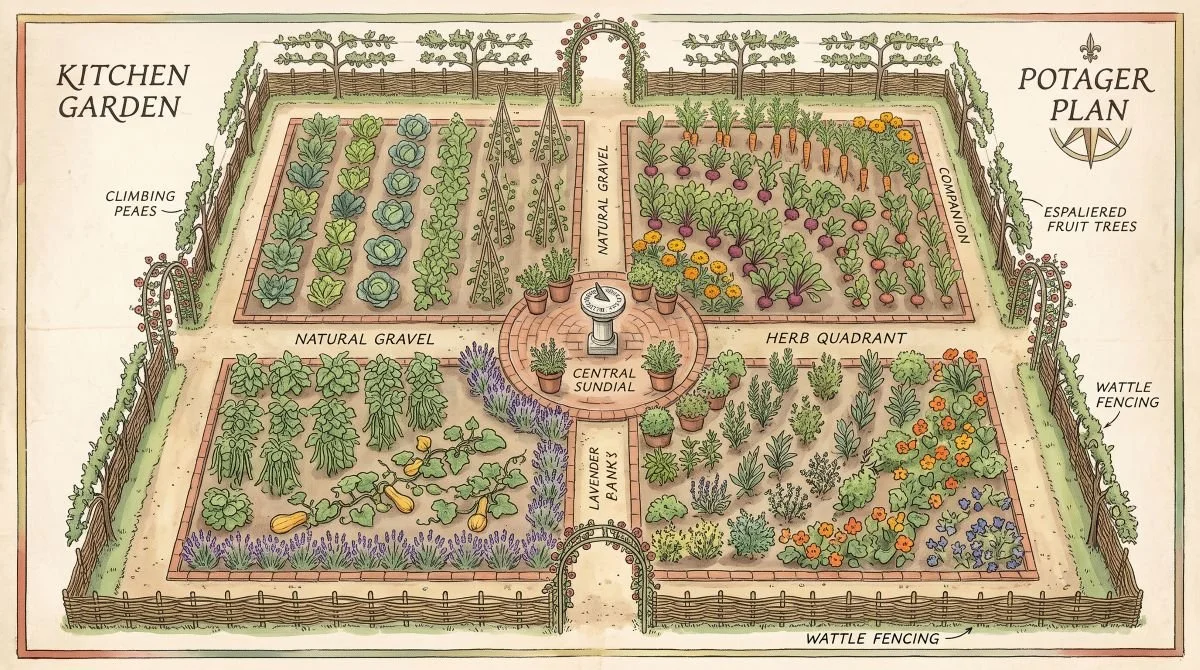
Illustration of a traditional four-square potager edged by wattle-woven low fencing and espalier-trained fruit trees.
3. Raised beds
Raised beds get an honorable mention and earn their place in two ways. They let you start with good soil where the native soil is heavy clay, shallow or poorly drained, and they bring the garden up to you, so there's less bending to plant, weed and harvest.
A taller bed is easier on the back. Beds 12 to 18 inches tall suit most vegetables, and 18 to 24 inches makes a comfortable seat for sitting on the edge. A raised bed also gives the planting a defined edge from the first day.
Keep raised beds 4 feet wide or less when you can reach them from both sides, and about 3 feet when you can reach them from only one side, so you can access the middle part of the bed easily.
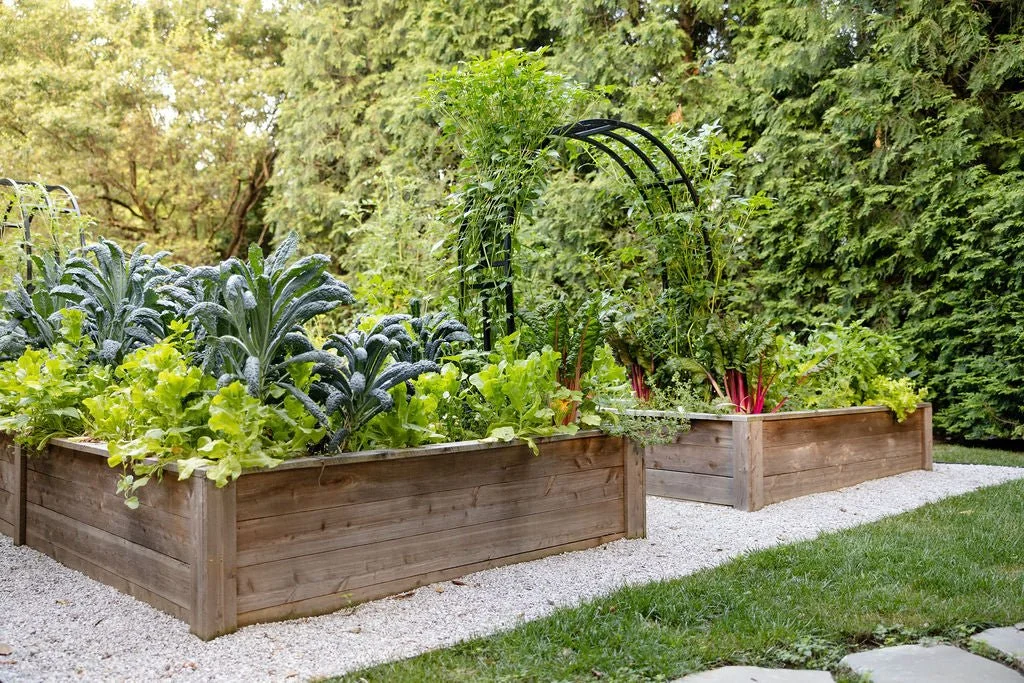
Raised-bed potager. Image: Gardenary
4. Give the garden a focal point
Every potager needs a focal point; an attention-getter that draws the eye. It might be an arch, a vine climbing a trellis on a wall, an espalier, a gorgeous citrus in a large pot. A simple obelisk trellis in a raised bed often does the job beautifully. It could be sited symmetrically at the intersection of two garden paths or at one end of a raised bed; locate it where it works for your space.
What do you plant in a potager?
Choose plants by the job they do in the design. A plant that edges a bed all year is doing something different from one that fills it for eight weeks in spring.
This is sampling of a plant palette for a mild-winter, dry-summer climate like Napa's, with a cool season roughly October to April and a warm season roughly May to September.
Role in the design:
Low planted borders
COOL SEASON: Evergreens are key. Boxleaf Euonymous, Wall Germander, small Pittosporums, small Hebes, Cat Mint
WARM SEASON: Evergreens are key, so same list but lightly prune to shape in later winter/early spring for new growth
Height and focal points
COOL SEASON: Specimen citrus or pomegranates in pots or planted in-ground. Espaliered apples, figs, pears, stone-fruit. Pumpkins, sweet peas on trellis. Artichokes.
WARM SEASON: cucumbers, vining tomatoes, passionfruit, pole beans, vining nasturtiums on trellis.
Repeat bed fillers
COOL SEASON: Red and green lettuces, Cruciferous vegetables, winter squash, root vegetables, kale, rainbow chard
WARM SEASON: Basil, tomatoes, cucumbers, peppers, summer squash, eggplant, bush beans and many others
Flowers that benefit edibles
COOL SEASON: Calendula, nasturtiums, sweet alyssum, pansies
WARM SEASON: Borage, Zinnias, cosmos, marigolds, sunflowers
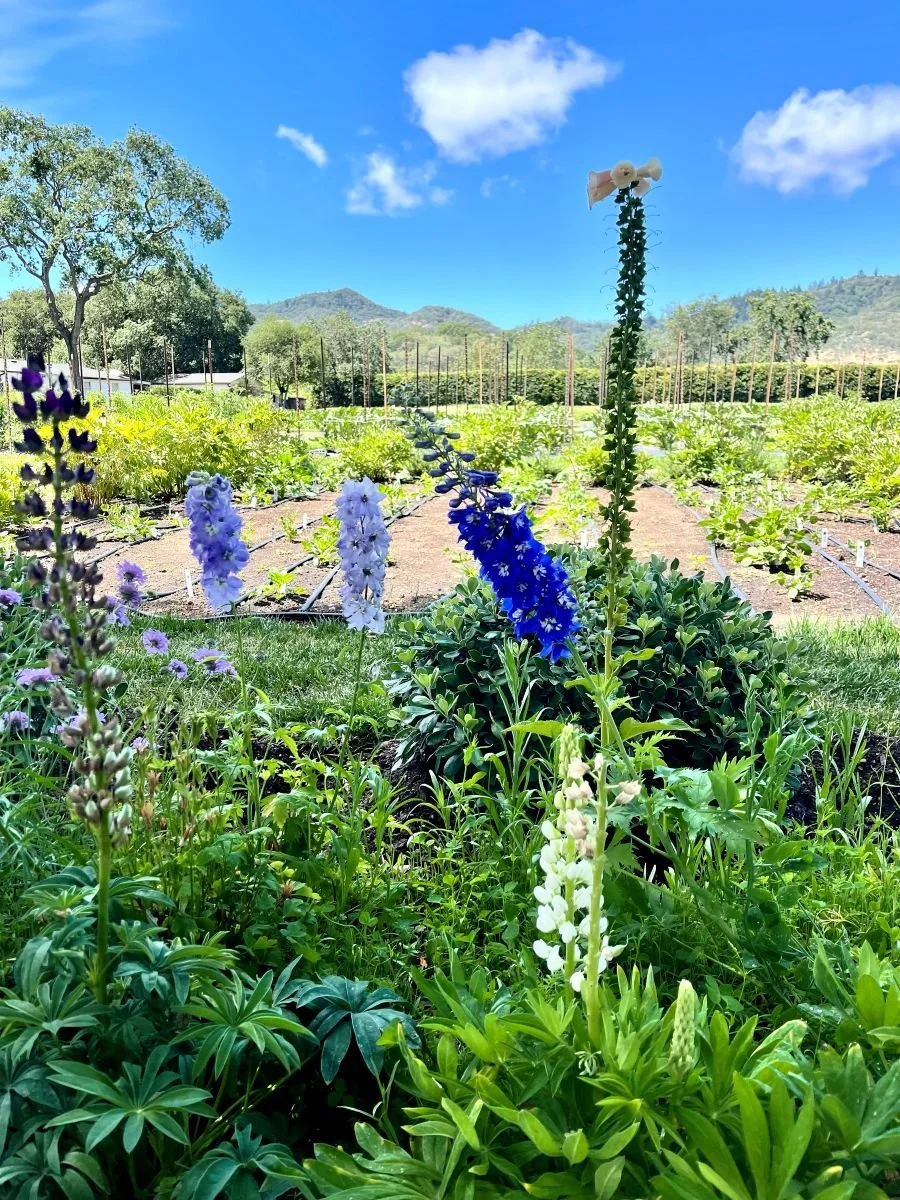
Flowers planted amongst the crops at the famed French Laundry kitchen garden in Yountville, California. Image: Tina Huffman
Permanent fruit and herbs (all year)
Rosemary, sage, thyme, and oregano in the beds; figs, citrus or pomegranate, other fruit trees in a large pot, trained as espalier, or planted in-ground.
Get your expanded season-by-season list of edible plants adapted to USDA Zone 9 here.
Can a potager work in a California garden?
Yes. The French potager style was developed in a climate with rain through the summer, so a California potager uses different plants and different timing. The structure stays the same.
In a dry-summer climate, the permanent layer can include Mediterranean acclimated plants such as rosemary, lavender, sage and thyme for edges, with figs, citrus, olives and pomegranates for height and year-round form.
Gravel paths suit the look and the climate, although, of course, many material options are possible . I wrote about the wider style in Mediterranean garden design in California.
The same design principles apply for colder locations. A potager in Vermont and a potager in Napa may share almost no plants, but the frame, paths, bed sizes and repetition carry over unchanged.
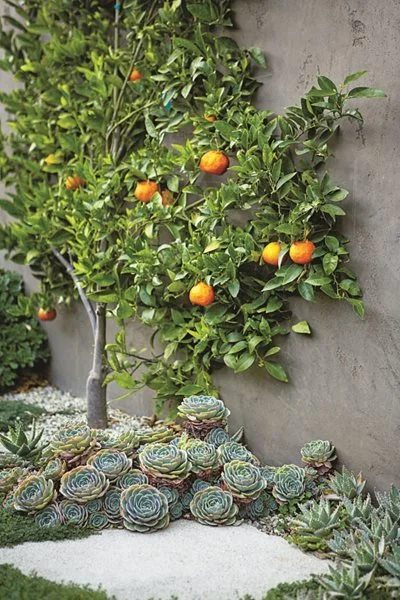
Espaliered citrus underplanted with succulents grown in the California garden of landscape designer Scott Schrader. Image: Mark Adams
Potager garden FAQ
Is a potager the same as a kitchen garden?
A potager is a kitchen garden, specifically the French ornamental style. It mixes vegetables, herbs, fruit and flowers in a designed layout including defined paths, edges, and focal points. A general kitchen garden can be any garden grown to produce food.
How big does a potager garden need to be?
A potager can be as small as two 2 × 4 ft beds arranged around defined pathways. What makes it a potager is the designed layout and details, so a small one can look just as designed as a large one.
Do I need raised beds for a potager?
No. Many traditional potagers use in-ground beds edged with low hedges. Raised beds help with poor soils, poor drainage, or a garden you'd like to tend without bending over or kneeling. One advantage to raised beds is they give you a clean, defined edge from the outset.
How do I keep a potager looking good in winter?
The design and structure do the work of keeping a potager looking good during winter months. Evergreen edges, defined paths, focal points, and permanent herbs fruit trees, and shrubs keep the shape of the garden when the more seasonal beds are resting. In mild-winter areas, a cool-season planting of select greens, root crops, squash, and even limited flowers can fill the beds too, providing both cool season harvest and a view.
What's a simple potager garden layout?
The easiest design to start is two raised beds side by side, with a path between them and a focal point such as an arched trellis joining the two beds. When you're ready for more, a symmetrical four-square plan is the traditional next step: two paths crossing at right angles, with a bed in each quarter.
Where to start
Before you buy a single seedling, walk your property, pick a sunny site with easy access, and measure it. Next, sketch your potager garden plan on graph paper: the frame, the paths, and the beds between them. Stand at the kitchen window and decide where the focal point should go.
How Greenhouse Garden Design can help
If you're in Napa, Sonoma, or nearby in the Bay Area and would like a potager designed and planted for you, my kitchen garden design projects start with a free discovery call.
If you're farther away, my weekly newsletter brings new posts on potagers and kitchen gardens to your inbox.