Edible landscaping means growing fruit trees, herbs and other food plants inside the ordinary planting beds of a garden. Edible garden beds are designed to be as beautiful as they are productive.
If it's challenging to envision this at first, simply imagine swapping out one ornamental plant form for an edible plant that has a similar form.
For example, an apple, pomegranate, or olive becomes the small tree beside the patio. The rosemary becomes the evergreen hedge in the border bed, and perennial herbs are now part of the mix of softening plants used along the edges.
Most gardens keep food and beauty in separate places. The ornamental beds sit by the house, and the vegetables get a patch out back where no one looks at them.
Edible landscaping makes food and beauty one and the same. The rest of this guide covers which edibles earn a place in a designed bed, where they go, and how to keep the garden looking finished in every season, even after springtime blooms and the end-of-summer harvest are done.
In short
Edible landscaping puts food plants into the planting beds you already have, chosen for their ornamental qualities as much as what they produce.
The best candidates are long-lived: fruit trees, perennial edibles, and evergreen herbs. Annual vegetables play a more seasonal role.
Design it the way you would any bed: an evergreen backbone, a select group of plants repeated in layers, and the focal point plant - using edible plants to fulfill most of these roles.
Your climate decides which edibles you grow, but the design approach works anywhere, from citrus and figs in California to apples and pears in colder regions.
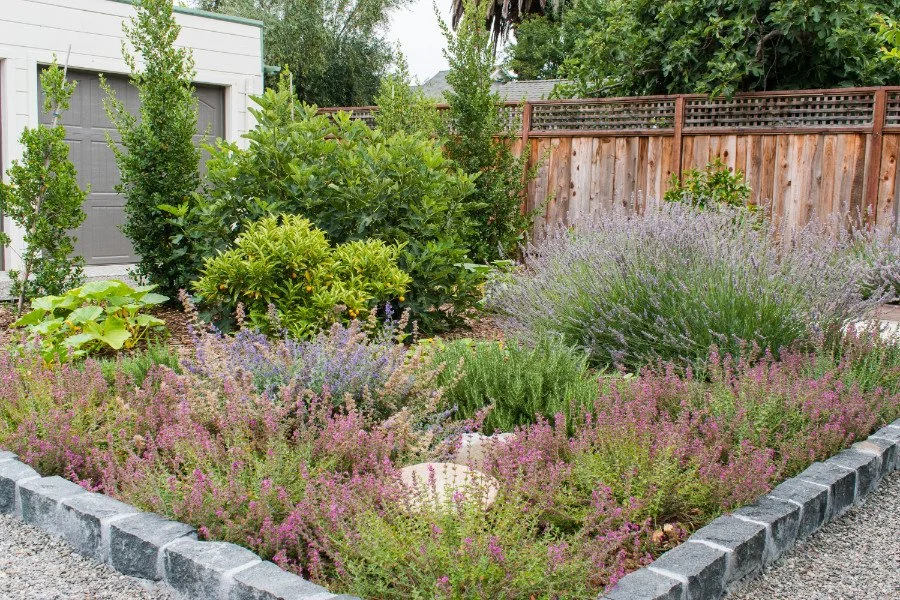
My garden bed featuring a fig, kumquat (citrus), pumpkin, rosemary, lavender, cat mint and teucrium. This was not originally designed to be an edible bed, but it is.
How is edible landscaping different from a vegetable garden?
This is a great question. A vegetable garden is strictly a production space. Its beds are organized around crops, rotation and harvest, and let's be honest, it is often at its best for a few months and rather bare for the rest.
An edible landscape is organized around the garden as a whole. The edibles sit inside the existing structure of the beds, alongside ornamental shrubs and perennials, and each one has to look good for most of the year to earn its spot.
There's also a third option - a middle ground if you will - allow me to introduce the kitchen garden. A kitchen garden is a dedicated space for growing food, but it's designed to also have ornamental value.
If you want raised beds, trellises and an abundant harvest of vegetables, start with learning about what a kitchen garden is and how it fits into the larger landscape plan. If you love the formal French potager version (as I do) with its clipped edges and geometric beds, then you'll enjoy reading my guide on how to design a potager garden which covers all the details.
The point is a garden need not sacrifice either beauty or productivity - It can have both.
A kitchen garden near the house handles the vegetables in addition to having some ornamentals mixed in, and edibles carry on through the rest of the landscape as permanent plantings that are both beautiful and food-providing.
Which edible landscape plants are beautiful enough for a designed bed?
The edibles that work best in a landscape share a few traits. They live for years, they hold their shape, and their leaves, bark, flowers or fruit are attractive independent of their food value. Here's how they sort by the job they do in the bed.
Anchor or focal point: A citrus tree, such as a Meyer lemon or mandarin, has glossy evergreen leaves, fragrant white blossoms in spring and bright fruit through winter. A pomegranate has gorgeous orange-red flowers in late spring, yellow fall color, and fruit that hangs like holiday ornaments in fall and winter. A fig's large, iconic leaves show up in spring and its ornamental fruit in summer, followed by yellow fall foliage and a striking branch pattern for winter. In a cold climate, swap in pears, apples and my latest obsession, quince, for spring blossom and fall fruit.
Evergreen backbone: Bay laurel and rosemary are the larger culinary herbs. They're evergreen and hold their shape all year, so they can be clipped into hedges or grown as shrubs. (Laurels can even be large trees.) Pineapple guava works here too, with gray-green leaves, silver undersides, and delicious edible petals in addition to its fruit.
Supporting layer: Culinary sage makes a soft, mid-height mound, and artichokes add dramatic silver leaves.
Front edge: Thyme stays low and softens path edges. Chives, nasturtiums and alpine strawberries make pretty, tidy edging.
Vertical: For height on a wall or fence, grow grapes on an arbor or train a citrus or pomegranate as an espalier.
Citrus, figs, bay laurels, pomegranates, thyme, rosemary and more have been have been top of my list for ornamental landscape design, long before I began designing specifically for edible landscapes.
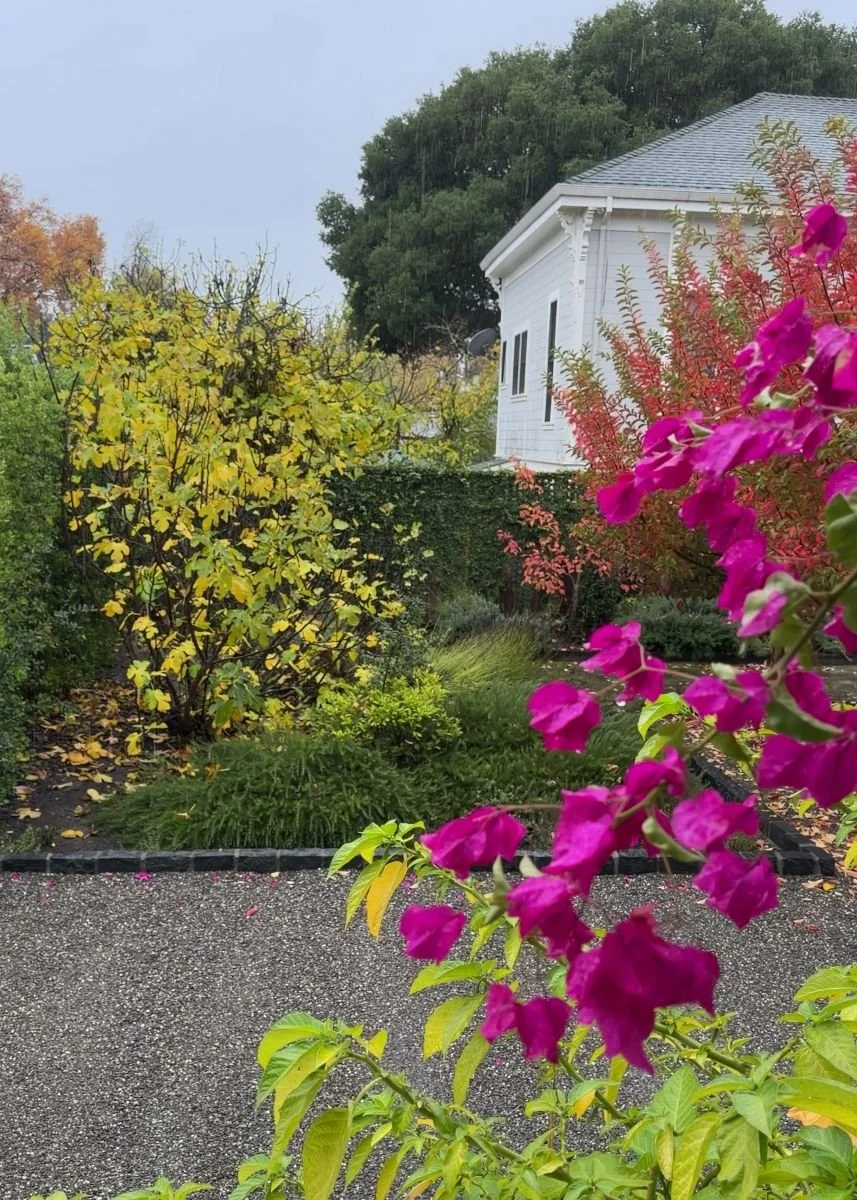
The same fig tree seen above is much bigger now and and serves as a focal point, showcasing beautiful yellow fall color.
Does edible landscaping work in any climate?
Yes. Your climate decides which edibles you can grow, but the design decisions about where they go and what job they do stay the same.
In mild, dry-summer climates like much of California, many of the plants above thrive with little summer water once established.
The same idea runs through my own garden, which I wrote about in my Mediterranean garden design reveal. A kumquat and a fig share the beds with lavender, rosemary and catmint.
In colder climates, apples, pears and quince can take a prominent anchor role, or help form a backbone when trained as an espalier, for example. Hardier herbs like chives, oregano, sage, and thyme still soften the edges.
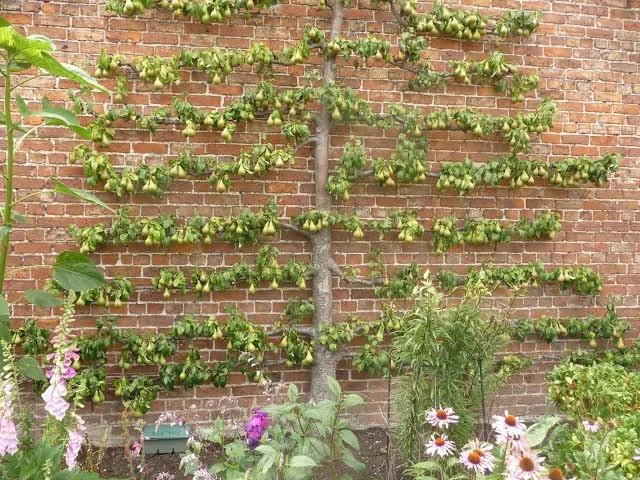
A spectacular espaliered pear tree trained against a brick wall. Source - Reddit
How do you design an edible landscape?
Start with the garden plan, then the plants. Here is the sequence I follow.
Look at the beds you already have. Notice which ones get six or more hours of direct sun, since most edible plants need it to produce well. Also note which beds you can see or pass by regularly since the reality is, those are the ones you will tend and harvest from. If a bed earns a check mark for both, then it's a winner.
Choose one focal point plant. A small fruit tree or sculptural shrub can anchor a planting bed beautifully. You likely won't do this in every single bed, but consider it.
Give the bed an evergreen backbone. Use the evergreen edibles above, or a more traditional choice like euonymus, holly or boxwood. This layer does a lot of the heavy lifting toward keeping the bed looking designed in January.
Repeat a few plants. Select a handful of perennials or herbs and repeat them in groups along the bed. Seeing the same sage repeated several times down a bed leads the eye from one end to the other and makes the planting look planned rather than hodgepodge.
Add a small harvest pocket. Set aside one area near the path for annual edibles: basil and peppers in summer, lettuce and chard in winter. Keep it small and edge it with something evergreen so it looks finished when it's empty.
Plan how you'll reach things. Leave stepping stones or a gap in the planting so you can pick fruit and clip herbs without walking on the bed. In raised beds, keep them narrow enough to reach the middle without stepping in: about 4 feet wide if you can reach from both sides, or 3 feet max against a wall or fence.
Group by water needs. Drought-tolerant trees and herbs want deep, infrequent watering. Annual vegetables want more. That doesn't always mean a separate zone. Sometimes the thirstier plants just need an extra emitter or a higher-flow one. It's worth having someone knowledgeable plan the irrigation with the rest of the garden.
Where do fruit trees go in a planting bed?
Fruit trees do best where you can see them and reach them. A tree near the kitchen or beside a path gets noticed, picked and pruned. One at the far back corner tends to be forgotten.
Give each tree room to reach its mature size without crowding the plants around it, and keep the planting under the canopy simple. Low herbs or mulch work better than a mix of perennials you'll trample at harvest time.
Think about where fruit will fall. Some fruit could stain paving, so keep them trimmed back from patios and light-colored paths if this is a concern.
Frost-tender trees do best against a warm, south-facing wall, where they get reflected heat and some protection on cold nights.
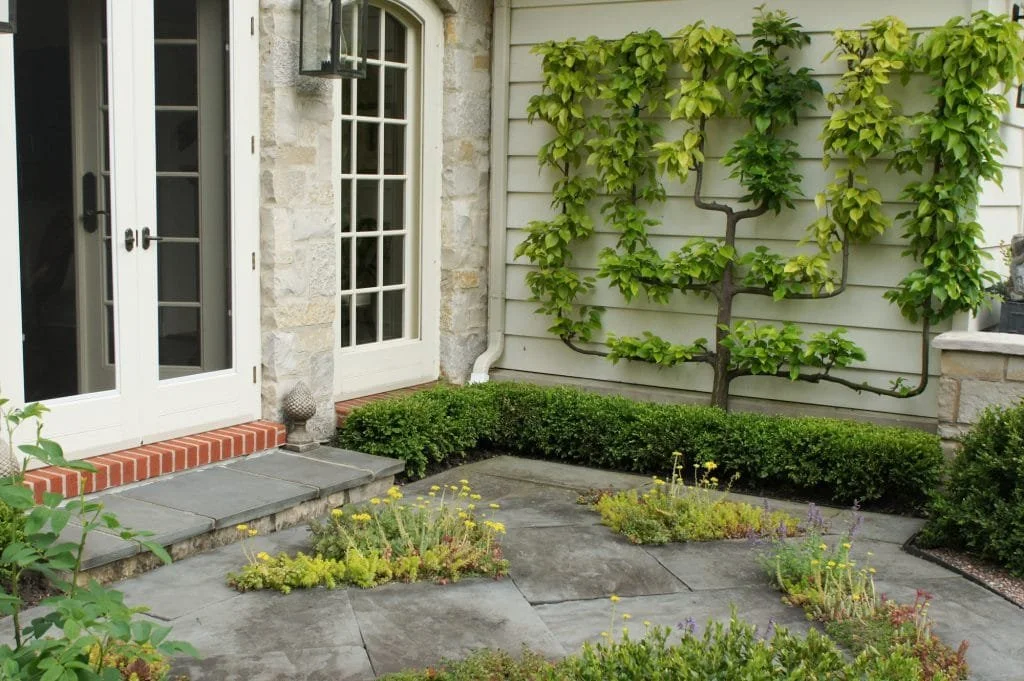
This candelabra-style espaliered pear is a beautiful front entry feature while the walls provide insulation from freezing Minnesota winters. Source: Here She Grows
Training any fruit-tree as an espalier flat against that wall will provide it with additional insulation in winter. An espalier also keeps fruit within easy reach, so more of it gets picked before it drops.
Just be sure it doesn't get too much heat. I once planted a grafted apple espalier against a full-sun, south-facing wall. That poor plant withered and shriveled away in the July-August rainless heat of the Bay Area.
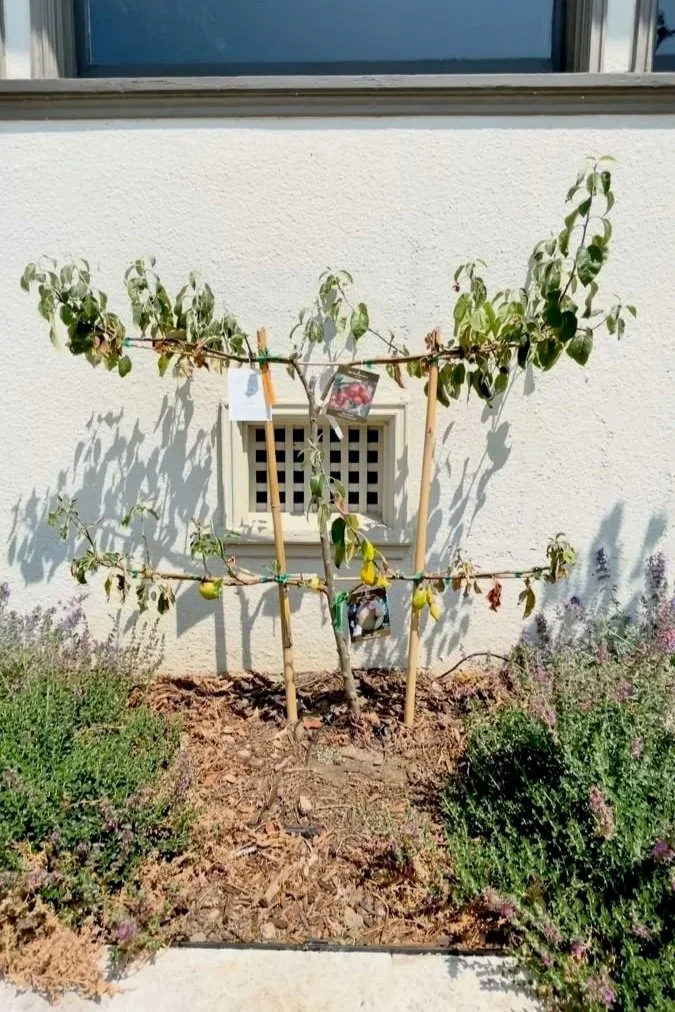
My poor espaliered grafted apple didn't survive summer against this full-sun, south-facing wall.
Otherwise, espalier is a beautiful and efficient means of growing by using vertical space, allowing you to fit larger trees like stone fruit, apples, pears and much more into narrow beds along a fence or house where it otherwise wouldn't be possible.
For one tree in particular, my guide to the best pomegranates to grow for your location walks through varieties, climate and care. (If you think your area is too cold for pomegranates, you might be pleasantly surprised.)
What should you leave out of an edible landscape?
Honestly, some edibles are better kept in a dedicated vegetable or kitchen garden. Tomatoes, wide-growing zucchini, and lanky corn come to mind. They either need support or take up a lot of your garden real estate. In an ornamental bed, they can distract from prettier plants.
On the other hand, pumpkins and other seasonal vining edibles can look beautiful incorporated into a traditional ornamental bed. It's my favorite way to grow my pumpkins, and by fall, they're on display on the front porch, and the vine can be pulled out.
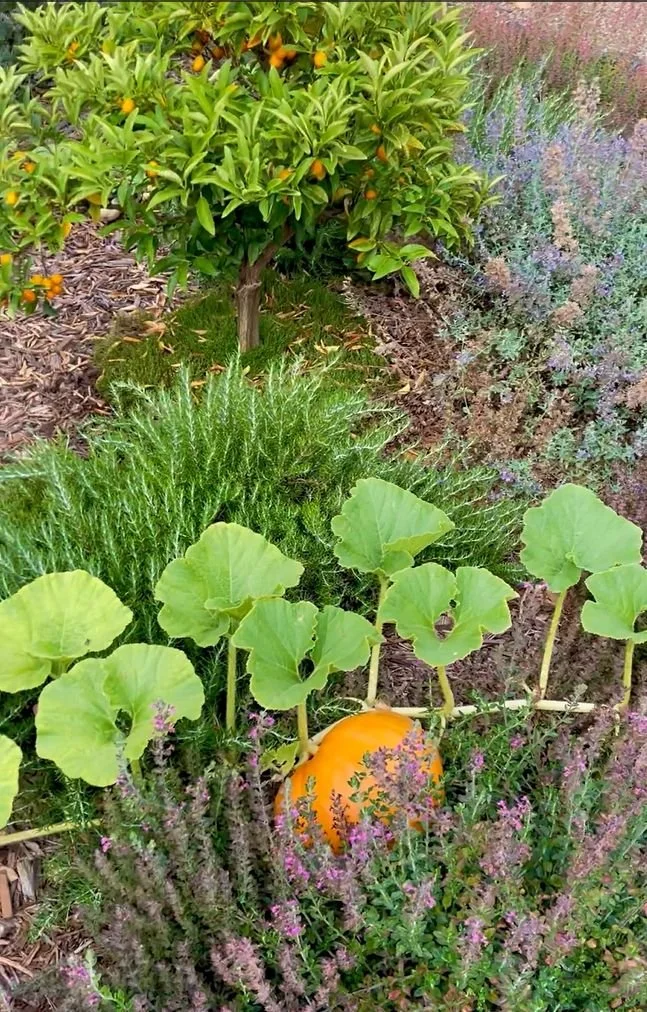
Pumpkins growing in an ornamental and edible landscape bed.
Edible landscaping FAQ
Can I add edibles to an existing garden?
Yes, and that's often the best place to start. Replace one large, tired shrub with a fruiting one. Swap a ground cover for creeping thyme and plant some chives behind it (both have attractive flowers ranging from purple to white).
Do edible landscapes take more maintenance?
Perennial edibles such as fruit trees and woody herbs need about the same care as ornamental shrubs, plus harvest. Annual vegetables take the most work, which is one reason to keep them to a small pocket.
Is edible landscaping the same as a food forest or permaculture?
They overlap, but they have different goals. Food forests and permaculture put production and ecology first. Edible landscaping, as I design it, asks every plant to earn its place twice: both for ornamental and productive value.
Can I use edible plants in the front garden?
Yes. Fruit trees, figs, pineapple guava, seasonal herbs and more look right at home in a front garden. Some HOAs and local laws have discouraged edibles in front, but many of those outdated ordinances are rapidly changing, so check first.
What are the easiest edible landscaping plants to start with?
In mild, dry-summer climates, rosemary, thyme, oregano, fig and pomegranate are among the most forgiving once established. In colder climates, apples, pears, stone fruit, chives and thyme are good places to start.
Where to start
You don't have to redesign the whole garden to begin. One fruit tree or a clipped mound of rosemary in the right spot is enough to see how edibles change a bed.
If you're in Napa, Sonoma, or the Bay Area and would like a garden designed around edibles, my kitchen garden and edible landscape design projects start with a free discovery call.