This post is adapted from my newsletter. Sign up here to get the latest garden design advice and news.

In The Garden
More Fall Color - Last week, I showed the fall color for lavender crape myrtle, aka Lagerstroemia indica 'Muskogee'.
This week, I'll show you what fall looks like on my Venus® dogwoods.
It's safe to say the Venus® Dogwoods have been an Instagram hit. I've gotten thousands of likes and hundreds of comments and questions about them.
With good reason:
They have the largest blooms of any dogwood (to my knowledge) - up to 5 and even 6 inches across.
They stay smaller than most dogwoods; they are the ultimate small-space tree. Mine were planted from 5-gallon containers in 2020, and they are barley 10-12 ft. tall.
They have more heat tolerance than most dogwoods.
As if those reasons weren't enough, they also have nice fall color.
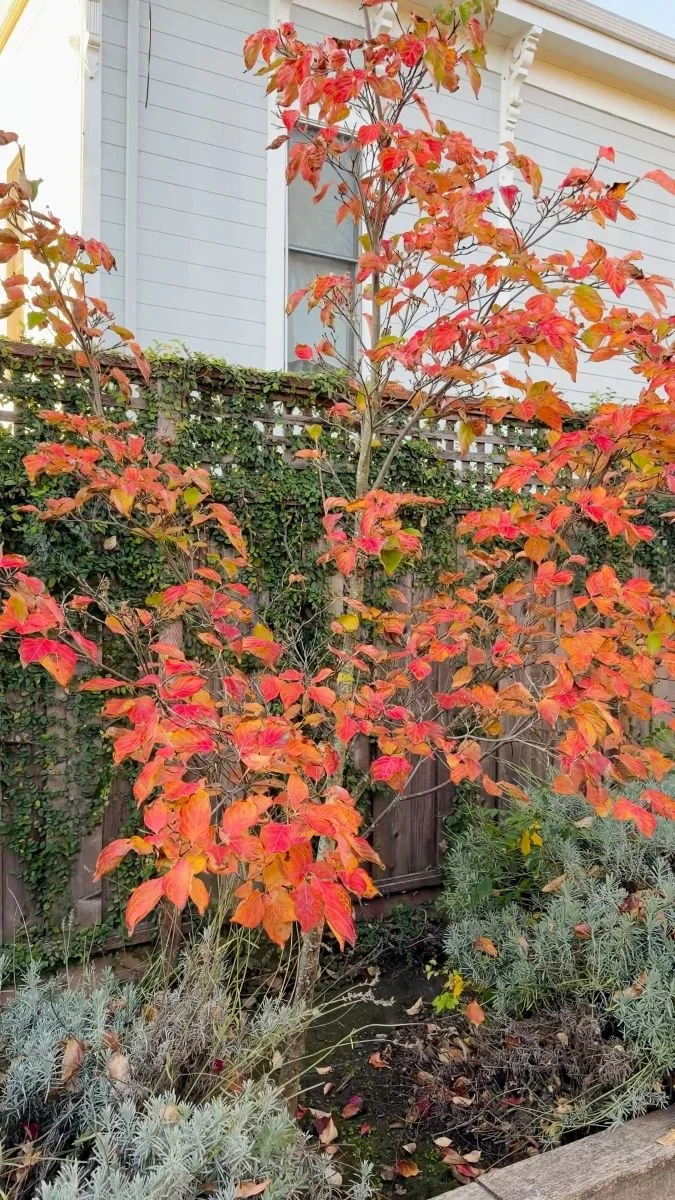
Venus® dogwood fall color
They were bred at Rutgers University from (Cornus kousa 'Chinensis' × Cornus nuttallii 'Goldspot') × Cornus kousa 'Rosea'
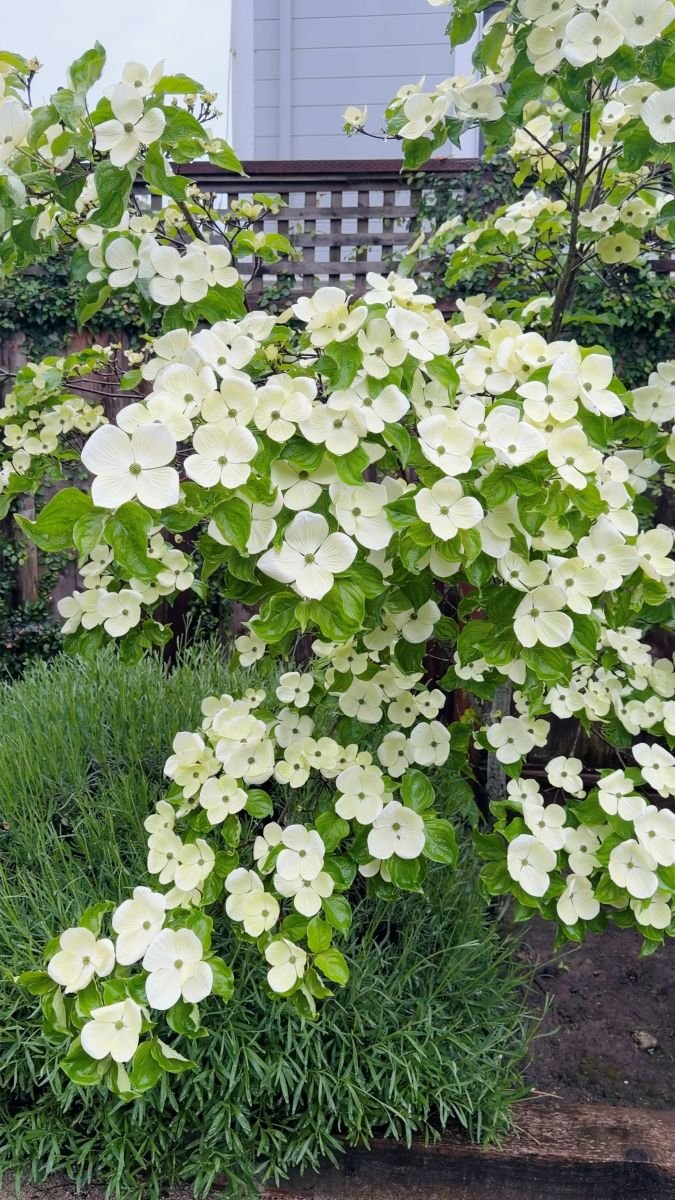
Venus® dogwood spring blooms
(Still) to do in the garden: Last week, I swore I'd have garlic in the ground within the week. I rolled into the local nursery ready to buy, and they informed me that the garlic was gone. I waited too long. The nursery employee recommended buying organic garlic and sticking that in the ground.
The thing is, I actually bought garlic last year to plant and (ahem) never planted it. But I did eat it, and it was more flavorful than the usual.
Most of the U.S. supermarket garlic is grown a couple hours from here in Gilroy, California, and it's a variety called California Early. No complaints, but last year's procrastination showed me that you can level up.
The variety is called Chesnok Red, and I actually bought it on Amazon just in case you too have waited or just want more.
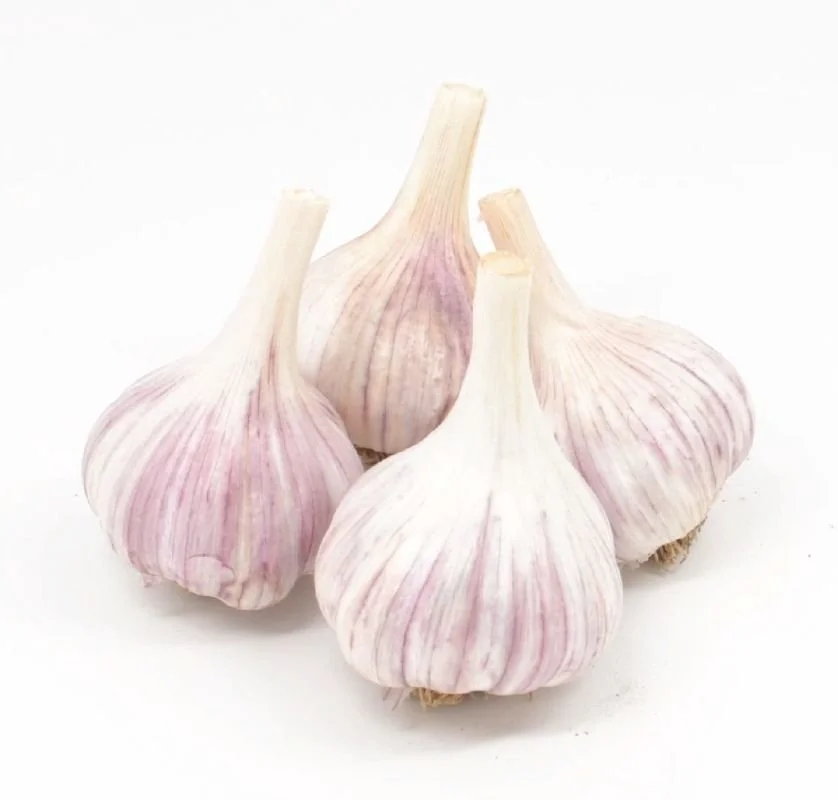
Chesnok Red Garlic
Designer Highlight - Bocce Courts
Yesterday, my landscape crew did a serious late-fall sprucing job. I'm hosting 20 people for Thanksgiving, and the garden was looking tired.
In particular, I had them rejuvenate my bocce court. I think bocce courts offer a good ROI for the landscape if it suits your interests and space.
They aren't very costly to install relative to some other landscape elements (overhead shade structures, I'm looking at you) and my opinion, they add value. Especially in an area like Napa, where bocce is considered part of the wine country lifestyle. Side note, I have experienced firsthand just how seriously bocce is taken by some in the local leagues.😳
The landscape crew had their work cut out for them. It had a bright green layer of moss growing over much of it. They had to remove all of that, then take it down to the decomposed granite sublayer and level it. The final stage is covering the court with 1/4 inch of oyster flour.
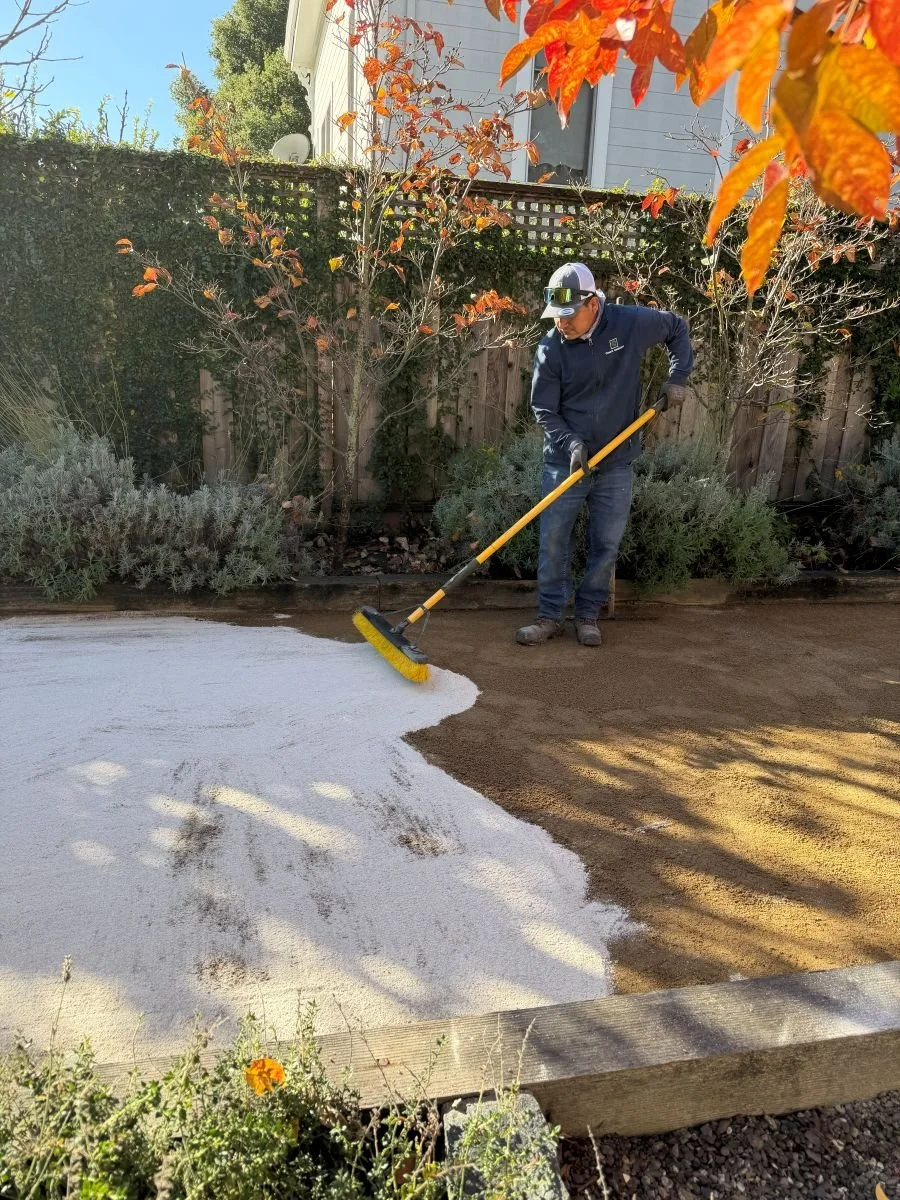
Landscapers spreading the top layer of oyster flour
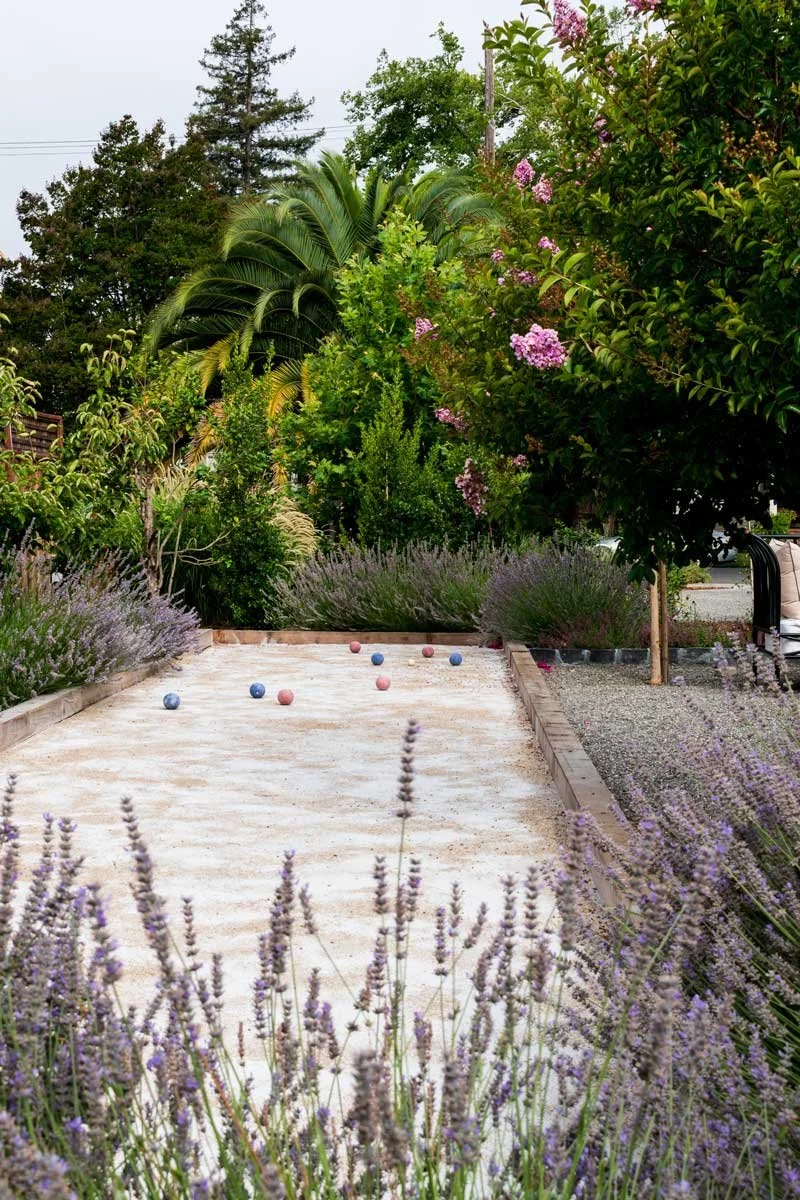
Lavender surrounding the bocce court
NEW BLOG POST

Edible landscaping: How to design a beautiful garden you can eat
The common vegetables that don’t belong in a planting bed, and why.
Why edible landscaping works in warm and cold climates alike, and what to plant if citrus isn't in your grow-zone.
The mistake I made with an espalier, and how to avoid it.
It’s all here: EDIBLE LANDSCAPING
What's happening in your garden right now? Leave a comment below and let me know.